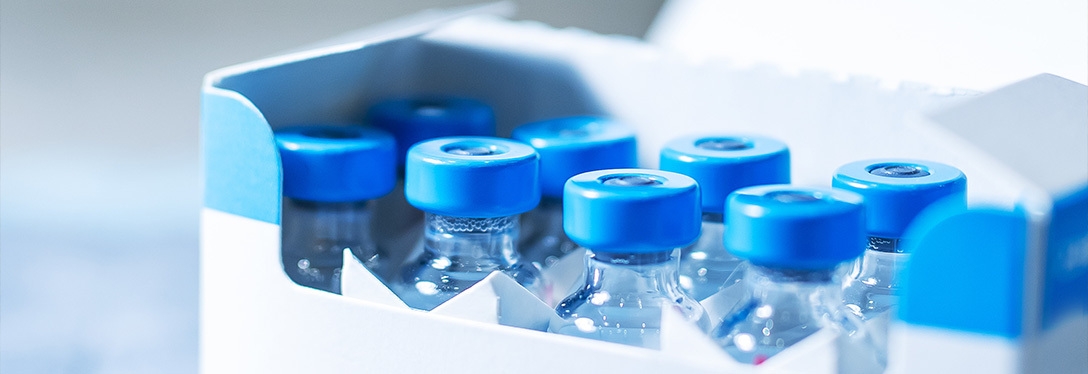
For pharmacies, GP surgeries and other healthcare settings, that means vaccine storage needs to keep pace as the winter peak approaches. As vaccination activity increases, so does the pressure on the vaccine cold chain. More deliveries, higher stock levels and more frequent access to vaccines can all put additional demands on refrigeration.
At Labcold, we have more than 90 years experience developing medical and scientific refrigeration. Here are some of the key considerations for maintaining reliable vaccine storage throughout the flu vaccination programme.
What temperature should vaccines be stored at?
Most refrigerated vaccines need to be stored between +2°C and +8°C, in accordance with their specific storage requirements. Vaccines should also be protected from freezing and stored according to the manufacturer's instructions.
Maintaining the correct temperature sounds simple, but it becomes more challenging when a refrigerator is being used heavily. Frequent door opening allows warmer air into the cabinet. Larger deliveries can increase the refrigerator's load, while overcrowding can make stock harder to organise and may restrict airflow. This is why a purpose designed pharmacy vaccine refrigerator is an important part of effective cold chain management.
Is checking the temperature enough?
A temperature display tells you what is happening at a particular moment. Continuous temperature monitoring provides a much clearer picture of refrigerator performance over time. This can help identify temperature fluctuations or excursions that may not be picked up by occasional manual checks, while providing useful data if an incident needs to be investigated.
Labcold's IntelliCold® Pharmacy 24 Range has been developed with this in mind. The latest range uses three independent temperature probes: air temperature, a simulated load probe and a low temperature detection probe. The low temperature detection probe provides an additional safeguard against freezing, an important consideration when storing temperature sensitive medicines and vaccines. Labcold is currently the only manufacturer to incorporate a dedicated T3 sensor, providing an important point of difference as industry standards continue to evolve.
The 24 Range also features intelligent event logging and Bluetooth connectivity, allowing users to access temperature data through the Labcold Connect app.
What happens when a vaccine refrigerator gets busy?
Flu vaccination programmes can significantly increase refrigerator usage. Staff may be accessing vaccines throughout the day, while deliveries can result in higher stock levels. Keeping the refrigerator organised, such as using divided drawers, and avoiding unnecessary door opening can help minimise temperature fluctuations.
Good stock management also helps:
- Keep frequently accessed vaccines easy to find.
- Minimise unnecessary or prolonged door opening.
- Avoid overcrowding shelves or obstructing airflow.
- Review stock levels regularly.
- Rotate stock and monitor expiry dates.
It's also worth considering whether your refrigerator has sufficient capacity for peak demand, rather than simply meeting your average requirements. Labcold’s range of products include a variety of capacities, such as benchtop, undercounter, free standing, advanced, and portable carriers.
How do you keep a vaccine refrigerator dependable through flu season?
Regular checks can identify potential issues before they escalate.
- Check temperature performance: Review recent temperature records and look for unusual fluctuations, trends or excursions.
- Check alarms: Make sure high and low temperature alarms are working, along with door open or power failure alerts where fitted.
- Check calibration: Ensure temperature monitoring equipment is appropriately calibrated and that calibration records are current.
- Review capacity: Consider the amount of vaccines you expect to hold during the busiest part of the programme. Is there enough space without overcrowding?
- Check the refrigerator's condition: Inspect doors, seals, shelving and the general condition of the equipment.
- Review maintenance: Check whether preventative maintenance or servicing is due. Addressing potential problems can help reduce the risk of disruption.
- Check your contingency plan: Make sure staff understand what to do if there is a power failure, equipment fault or temperature excursion.
What happens if vaccines are stored outside +2°C to +8°C?
A cold chain incident can happen even when a refrigerator has previously performed reliably, so it is important to have a procedure in place. If vaccines are exposed to temperatures outside their recommended storage range, affected stock should be identified and quarantined while its suitability is assessed. The incident should be documented and appropriate advice obtained before affected vaccines are used or discarded. Reliable temperature records can be particularly valuable during this process, helping establish what happened, how long the exposure lasted and what conditions the vaccines experienced.
Is your pharmacy refrigerator built for the months ahead?
Flu vaccinations began in September, but the demand on vaccine refrigeration can continue throughout autumn and winter. With influenza activity varying between seasons, it makes sense to prepare for sustained demand rather than a single peak. GOV.UK data shows that the start and peak of influenza activity can vary considerably between years.
If your current vaccine refrigerator is regularly at capacity, relies heavily on manual temperature checks, lacks useful monitoring or alarm functions or is becoming difficult to maintain, it may be time to review whether it is still suitable for your requirements. When considering an upgrade, look beyond capacity alone. Temperature stability, monitoring, low temperature protection, alarms, data access, usability and ongoing maintenance can all contribute to effective cold chain management.
Supporting your vaccine cold chain
At Labcold, our IntelliCold® Pharmacy refrigeration range is designed specifically for the safe storage of temperature sensitive medicines and vaccines. The range includes compact benchtop, under counter and larger freestanding models to suit different healthcare environments.
Our support extends beyond refrigeration, with services including commissioning, temperature mapping, preventative maintenance and UKAS accredited temperature calibration. Our in house UKAS accredited laboratory can also calibrate equipment from other manufacturers.
With the 2026/27 vaccination programme underway, now is the time to review your vaccine refrigeration, monitoring and cold chain procedures. Explore Labcold's IntelliCold® Pharmacy refrigeration range or contact our team to discuss your vaccine storage requirements.